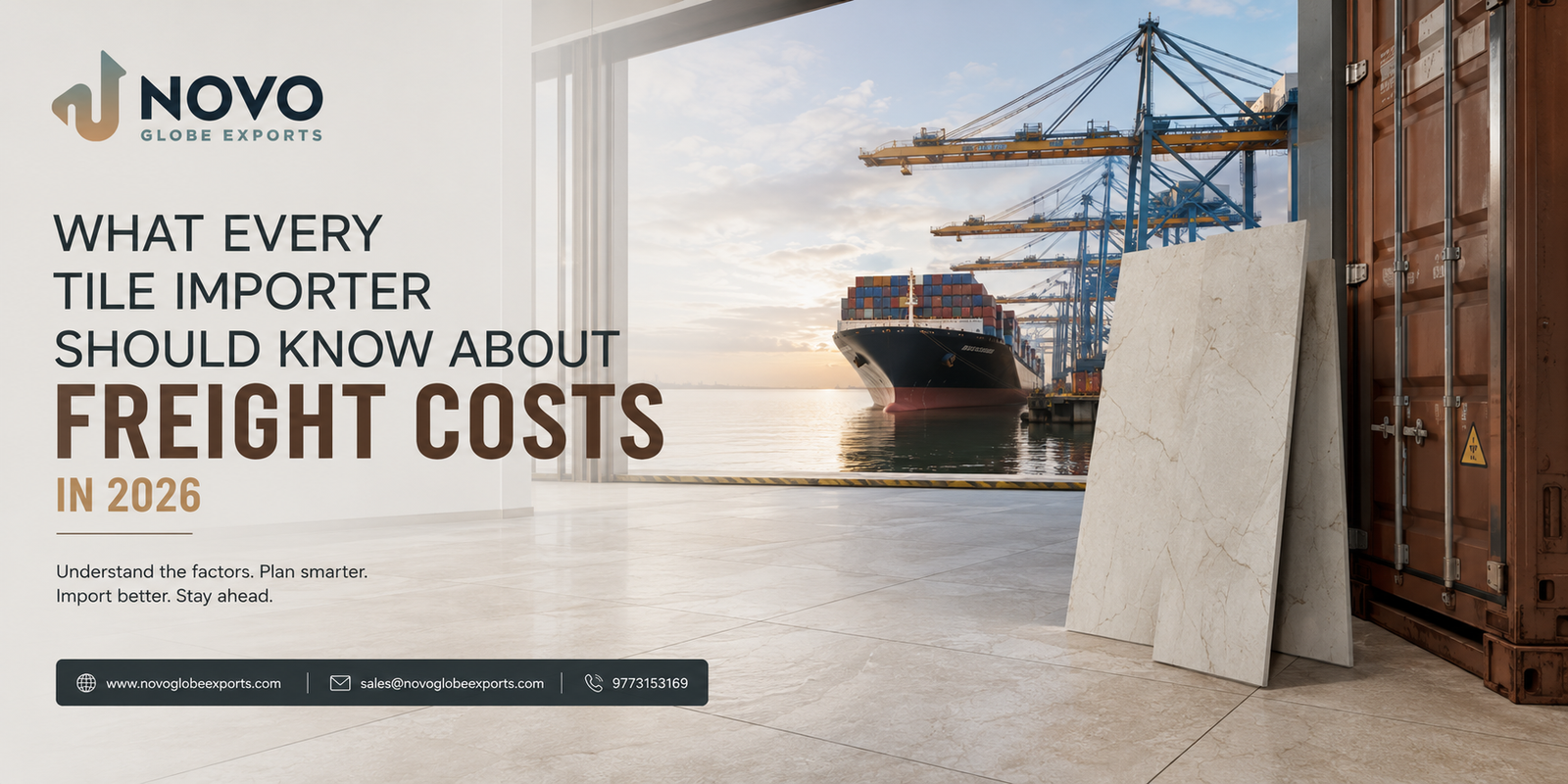
What Every Tile Importer Should Know About Freight Costs in 2026
When tile buyers compare suppliers, the first thing they usually look at is the product price.
But experienced importers know that the real cost of importing tiles goes far beyond the price per square meter.
In 2026, freight costs have become one of the biggest factors affecting the tile business worldwide. Rising shipping rates, container shortages, route disruptions, war-risk surcharges, and longer transit times are forcing importers to rethink how they purchase and plan inventory. Recent industry reports show that higher freight rates and logistics disruptions have significantly impacted ceramic exports from major manufacturing hubs such as Morbi, India.
As a tile exporter, I have noticed that buyers today ask more questions about shipping costs than ever before. A few years ago, the focus was mainly on design and price. Today, freight has become part of every purchasing decision.
Why Freight Costs Matter So Much in the Tile Industry
Unlike electronics or luxury goods, ceramic and porcelain tiles are heavy products.
A container may hold thousands of square meters of tiles, but shipping still represents a significant portion of the final landed cost. When ocean freight increases, the impact is felt immediately by importers, distributors, retailers, and even end customers.
What’s Driving Freight Costs Higher?
Several factors have affected global shipping in recent years:
Geopolitical Tensions
Disruptions in key shipping routes have forced vessels to take longer routes and incur additional costs. Exporters have faced war-risk surcharges, insurance increases, and shipment delays. Reports from the ceramic industry indicate that these disruptions have affected thousands of export containers and increased overall shipping expenses.
Container Availability
Container shortages continue to affect export planning. When containers become difficult to secure, shipment schedules become less predictable and costs increase. Previous shortages significantly reduced ceramic export volumes from Morbi and created challenges for both exporters and buyers.
Rising Insurance and Freight Charges
Exporters are also facing higher insurance premiums and freight surcharges. Some trade routes have experienced substantial cost increases due to geopolitical risks and route diversions.
How This Affects Tile Importers
Many buyers focus on FOB pricing when comparing suppliers.
However, freight costs can sometimes have a greater impact on profitability than small differences in tile pricing.
When freight rises:
- Landed costs increase
- Selling margins decrease
- Inventory planning becomes more difficult
- Project budgets become less predictable
- Customers become more price-sensitive
This is why smart importers now evaluate total landed cost rather than product price alone.
What Smart Buyers Are Doing Differently
The most successful importers are adapting their purchasing strategies.
Planning Earlier
Instead of placing orders at the last minute, buyers are forecasting demand further in advance. This allows more flexibility in shipment scheduling and freight negotiations.
Focusing on Reliable Partners
Many buyers now value consistency more than the lowest price.
A reliable exporter who provides accurate shipping information, strong documentation support, and proactive communication can help prevent costly surprises.
Optimizing Container Utilization
Maximizing container loading efficiency can significantly reduce freight cost per square meter.
Even small improvements in packing efficiency can have a noticeable impact on overall profitability.
Looking Beyond FOB Prices
The cheapest FOB offer is not always the most profitable option.
Buyers should evaluate:
Trend 4: Wood-Look Porcelain Tiles
- Product quality
- Freight costs
- Transit times
- Packaging quality
- Supplier reliability
- Documentation support
The complete picture matters.
My Experience as a Tile Exporter
Over the past year, I have had many conversations with importers who initially focused only on tile prices.
After calculating freight, insurance, customs duties, and local transportation, they realized that a slightly higher FOB price from a reliable supplier often resulted in a lower overall landed cost.
This is one reason why successful importers pay attention to logistics as much as they pay attention to product selection.
Looking Ahead
Freight costs will likely remain an important factor in global trade throughout 2026. Industry analysts continue to highlight the impact of freight rates, geopolitical uncertainty, and logistics disruptions on the ceramic sector.
For tile importers, the goal should not be to find the cheapest product.
The goal should be to build a supply chain that is reliable, cost-effective, and sustainable over the long term.
The businesses that understand freight, plan ahead, and work with experienced export partners will be in a stronger position to succeed regardless of market conditions.
At Novoglobe Exports, we believe importing tiles should be transparent and predictable. That’s why we help our customers understand not just product pricing, but the complete journey from factory to destination.
Novoglobe Exports
Connecting Global Buyers with Quality Indian Tiles